Monday, April 20, 2015

Informal Learning Space in Rouse Life Science Center

For many of us, the Rouse Life Science Center is a bit off our beaten paths on campus -- on the corner of College and Samford, it houses the Department of Biological Sciences, contains lots of research space, offices, and some lecture halls. The only area where students canhang out between classes is at the bottom of the center stair case - a place where you will see student research posters displayed together with glass vitrines showcasing some biology stuff.

Until recently, students could only hang out on wobbly surplus-harvested furniture, and the space did not really allow for collaborative learning.  All of this has changed now, because of the efforts of one faculty member in the department, Dr. Sharon Roberts.  She set aside resources, funds and time to change the place.

Is it still at the bottom of the stair case?  Yes, but now students have new chairs and tables to work at, a comfy couch corner, and an erasable round wall for collaboration.
Here some photos of the new additions

Sturdy Couch Corner
Comfy Couch corner -- sturdy for students to sit on all corners

erasable wall for collaboration
Rounded wall painted in dry-erase paint
 for collaboration

chairs and table
One set of table/chairs

interior designer showing off couch
Levitating Interior Designer

the two designers
The two master desingers

Monday, March 23, 2015

iTeach7 on Project/Team-based Learning

Friday's iTeach7 had a great turnout with an inspiring keynote by Mike Winiski from Furman University, fascinating faculty contributions, honest and helpful students, and a workshop that tied everything together.

Mike Winiski
Mike Winiski
Mike Winiski's keynote focused on "Adventures in Project-Based Learning:  Cats, Dogs, Drones, and Streetlights."  He gave examples of undergraduate student projects that were contained within a term but then also some that kept going and spread to other disciplines.  He called these kinds of projects actionable.  All projects used GIS (Geogrpahic Information Systems) to analyze data in new ways.

A self-contained project was the discussion of which route Xerxes took through Turkey (northor south), and based on elevation, water availability, and other geographic features, the researcher concluded that a southern route appeared to have been more likely.  A second project analyzed voting behavior combined with violent incidents of various kinds in the 2013 Kenya elections, connecting this data to other demographic information and drawing conclusions about the reasons for violent outbursts in some regions but not in others.

One actionable undergraduate project was the local problem of missing streetlights in a historic and poor neighborhood.  With GIS, a drone, collaboration from the department of Physics, student organizations, and other units, the students not only mapped the darkness in this neighborhood, using a drone to collect light data (before it became illegal to fly drones over private property), mapping the data, but then also raising money to increase the number of streetlights to make the neighborhood safer.  https://www.youtube.com/watch?v=EZrMyKqWZvQ&feature=youtu.be&list=PLDE7Cf9EDcOeGoFVu0ctfmaNfPyqChlfs

gives you more information on the project.

What kinds of actionable projects can you imagine in your courses?

Ana Franco-Watkins, Psychology, discussed game theory and behavioral science in her "Let the Games Begin - Project-Based Learning."  In her course, students worked on multiple small projects to apply psychological concepts to various types of games.

Margaret Williamson, Pharmacy, showed the complex team work all AU Pharmacy students participate in during  3 years of their studies in "Pharmacy Practice Experience:  A Longitudinal, Team-Based Approach in Pharmacy Care to the Community." Students from different years team up to visit members of the community who need medical advice that is appropriate for Pharmacy students to give out.

Cathleen Erwin, Political Science, described her "Team-based Learning:  Facilitating Application in the Classroom," showing some of the methods she is using to make sure student teams are successful.

Minseo Park, Physics, showed us the possibilities of "Fusion of Science and Art:  Project-Based Learning in Physics of Music Course," where his students learned to apply acoustical and other physics concepts to building and playing their own musical instruments out of everyday materials.

Three students discussed their perspectives on collaborative learning, reminding us that clear expectations are essential.  They also assured us that while group work may not be perceived as popular, it is important to students, and they see the value of these kinds of projects.

After lunch, we continued with a workshop led by Mike Winiski where we identified a course that would benefit from project-based learning and then worked our way through backward design to make the project the integral part of the course, with content and assignments clearly connected to the project.

Oh, and did I say that three of the four faculty presenters teach in an EASL space, and one of the students drew on his experiences as a student in an EASL space?

The recorded presentations are available at http://aces.panopto.auburn.edu/ -- log on with your AU userid and password and then search for iTeach7.

Friday, February 27, 2015

New Power Management from Steelcase

A couple of weeks I indicated that I had seen something pretty cool from Steelcase.  They showed a group of us here at Auburn University their new system, Thread, to get power pretty much anywhere you want in a room by running it safely under the carpet.
Thread in action

So, notice that we have two layers in our sample.  The bottom layer is our regular floor, the top layer is our regular carpet.  The power module is very thin, making it invisible and infeelable under the carpet.  Specialized plugs make the appearance of the power outlets very flat as well.  And to top it off, a power pole can be added to this system that has 6 outlets.
The modules can be jigsaw puzzled together to cover central areas of a floor without power.
So, no need for a raised floor (expensive), core drilling (expensive) or trenching (really expensive, esp when asbestos gets thrown into the mix.

I am looking forward putting this kind of solution in place in some areas where power is needed in the middle of the floor.

Friday, February 13, 2015

Discussion with Dr. Jacob Wright

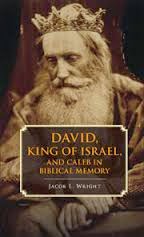
Yesterday, our college had the great pleasure to host Dr. Jacob Wright from Emory University to talk with us about how to publish successfully a fully enhanced ebook with the blessings of a major publisher.
While many of the discussions around epublications in education tend to center around text books -- and for good reason, the publication of scholarship, especially when focused on monographs, tends to be discussed less intensely.  Dr. Wright decided to see what happens and discovered that not only can it be done but done beautifully.

You may have read his article last year in the Chronicle of Higher Education:  What Enhanced E-Books Can Do for Scholarly Authors, 

Dr. Wright's book
His work in the field of biblical history may not strike folks as an obvious place to work on an epublication, but in many ways, this field is perfect:  the combination of very old texts that can only be accessed through digitized versions with a multitude of reimaginings these old texts allow for.  Combining a scholarly text with maps, art work, music, video clips, references to pop culture, and links to additional scholarly resources makes the potentially dense academic prose more accessible to a larger audience.  The result is an aesthetically pleasing work that the author very clearly enjoyed creating.

The discussions did of course move to such topics as how to negotiate with publishers, how self or semi-self publishing works with peer reviewing, how such publications may need to be considered for tenure and promotion -- I believe the participants came away with new ideas both for what kinds of tools to use and how to discuss these issues in their own departments.  The enhanced ebook we saw had been designed in iBooks Author and can be bought through iBooks.  Other tools mentioned were Atavist (https://atavist.com/) and Creatavist (https://www.creatavist.com/) to create engaging epublications.

I believe any such discussion would need to include the university library as its resources and knowledge are an invaluable ally in getting such publications accomplished -- maybe even going so far as having one's own digital university press...

Friday, February 6, 2015

EASL LITE

Here is one idea for turning a classroom space into an EASL space without spending a fortune.  The room seats 36 comfortably
EASL LITE
EASL LITE

The tables are flexible but work best when sitting in groups.  We are sticking with the Steelcase Node chairs because of the flexibility in color and the comfort for the relatively short periods of time folks are spending in them.  With glass boards around the room, everyone has a space to collaborate.
individual table
Individual table in the EASL LITE

teaching station
Teaching station with sharable display


Because we are not getting wiring to all the tables (power in particular), the room not only becomes more versatile but also costs considerably less.  As we are seeing an increasing number of iOS and Mac OS devices in student hands, we opted for Apple TVs that folks can connect to via AirPlay - not all students will have that kind of device but enough to allow for collaboration and sharing.


With two large displays, everyone has a good viewing angle, and the instructor still has a traditional computer with familiar software and/or the ability to connect a laptop via HDMI.

teaching station controls
Control buttons for teaching station


So far so good -- though today I saw a really cool in the floor power solution -- but that is for another post.


Friday, January 30, 2015

Auburn University's Conversations in Celebration of Teaching

CCT 2015


Today, Auburn University celebrated its second Conversations in Celebration of Teaching, with lots of participation from faculty from all across campus.
For more information about the event, see http://wp.auburn.edu/biggio/cct/


Most exciting for me was the number of faculty who have been teaching in the EASL spaces and were showing off  how they have been engaging their students with the course materials.  Lots of pictures of students working hard.  Here are some of the folks who were presenting and what their topic was on -- I am hoping that down the line I can add some of their posters as well.


  • Emily Burns (Art):  Breaking Out of the College Bubble:  Using the EASL Classroom to Engage the Community Beyond Auburn
  • Ana Franco-Watkins (Psychology):  The Game of Life:  Active Learning Strategies Applied to Game Theory
  • Yasser Gowayed (Polymer & Fiber Engineering):  Connecting Science to Practice:  A Function-Based Teaching Approach to Engineering Design
  • Patrica Hartman (Libraries) and Sharon Roberts (Biological Sciences):  Teaching Students About Srouces Through Infographics
  • Stuart Loch (Physics):  Exploring Active Learning Techniques in a Flipped-Classroom:  Lessons from an Introductory Physics Course
  • James Zanzot (Biological Sciences):  Open-colleague Examination:  A Novel Approach to Testing Strategies in the Flipped Classroom


Friday, January 9, 2015

Something to Read

new EASL signs
new EASL signs
On Monday, we are going to have our teaching retreat for the folks teaching in the two EASL classrooms.  As we are trying to model how to teach in these classrooms for faculty, they will be squarely put into the roles of students --minus the grades (would it not be great not to have to worry about grading when teaching?)

1.  Folks will learn from their peers -- four faculty will share a strategy, idea, assignment, activity each on how they are using the EASL spaces successfuly.

2. Folks will collaborate with their peers -- in groups, faculty will write language for a student contract that should clarify to students expectations and address at least some of the student expectations.  At the end, these drafts will be shared, and through a gallery walk, other groups can interact with these drafts.

3.  Folks will play with the technology in the room

For preparation, we are asking them to read at least 3 of the following articles that I found on the great blog post from Faculty Focus -- the best of 2014, bring a mobile device, syllabus and other course documents,  and find one online resource about active, collaborative, or otherwise engaged learning to share with colleagues.


Students Riding on Coattails during Group Work?  Five Simple Ideas to Try

Seven Characteristics of Good Learners

She Didn’t Teach, We had to Learn it Ourselves

Prompts to Help Students Reflect on How they approach learning

Three Strategies for creating meaningful learning experiences

Putting students in the driver’s seat:  technology projects to decrease passivity


You may have also seen the study Ball University published in Inside Higher Ed:  https://www.insidehighered.com/news/2014/12/12/interactive-learning-spaces-center-ball-state-us-faculty-development-program